«GIUS-S on Building Real Connections: NÓMADAS, Identity, and the Vision Behind Sync Beat’s First Showcase»
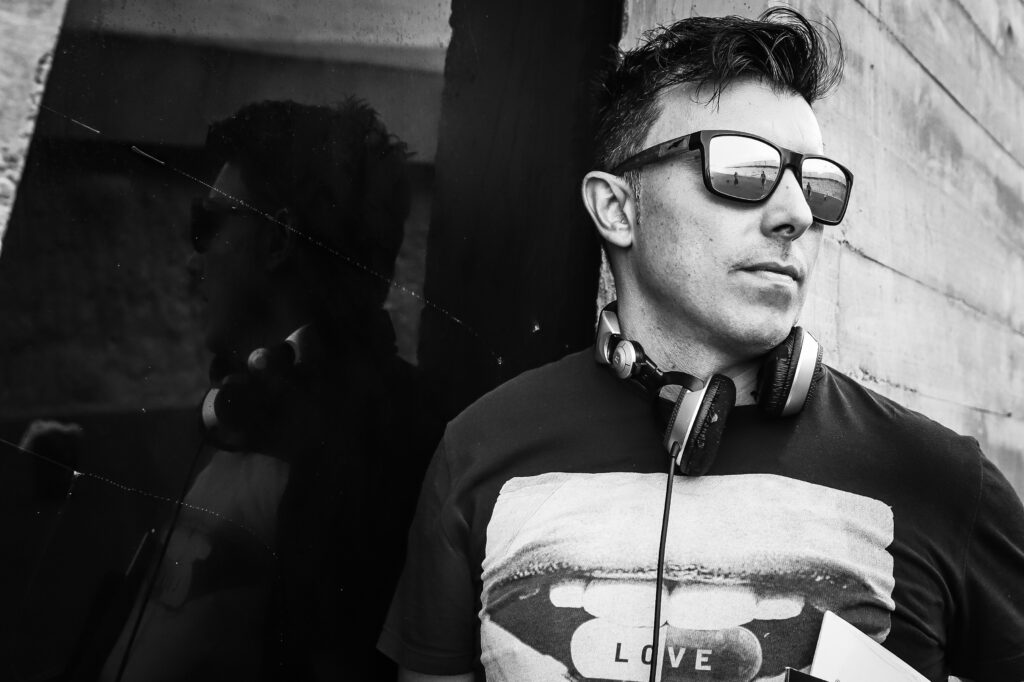
As one of the driving forces behind the NÓMADAS concept and a resident in Tenerife, what does it mean for you to open the path at the first Sync Beat Showcase?
For me, it represents a natural evolution of the project. NÓMADAS was born with the idea of creating real encounters around music, connecting artists, cultures, and different ways of understanding the dancefloor from a more human and artistic perspective.
Being part of the first Sync Beat Showcase means exactly that: opening a space where electronic music is experienced through identity, narrative, and connection between artists and audience, not only through entertainment.
Your sound blends Afro House, Deep Tech, Tech House, and organic grooves. How does that identity evolve within an editorial format like Sync Beat?
In a context like this, I try to go deeper into the journey and musical intention. When the environment also takes care of the visual, artistic, and conceptual side, the set stops being just a club session and becomes a more complete experience.
I am very interested in working tension, groove, and emotion in a more organic way, leaving space for the music to dialogue with the atmosphere and with the people.
You have shared the booth with numerous international artists. What have you learned from those experiences that you now apply to these kinds of showcases?
I have learned that technique is important, but the real difference lies in personality and in the ability to connect with the dancefloor without losing authenticity.
Sharing the booth with artists from different countries and scenes helped me understand that every crowd has a different energy, and that a good DJ does not impose, but reads the moment and builds something real together with the people.
This event embraces a deeper visual and artistic narrative. How does that influence the way you prepare a set compared to a regular club night?
It has a huge influence. When there is a narrative behind the event, I prepare the set thinking more in terms of storytelling rather than just a sequence of tracks.
I try to create moments, textures, and dynamics that align with the identity of the project and the visual experience. For me, that is where electronic music becomes truly immersive.
From your perspective as an artist and promoter, how do you think projects like this can change the way electronic music is consumed?
I believe we are living in a moment where many people are once again searching for experiences with identity, connection, and a real narrative behind the music.
For years, much of the scene focused only on immediate impact or fast consumption of events, but projects like NÓMADAS or this showcase with Sync Beat Magazine aim to bring back something deeper: collective experience, artistic curation, and the cultural value of electronic music.
For me, the future lies in creating spaces where the audience does not only go to listen to music, but also to feel part of an experience with personality, aesthetics, and human connection.